What Is Chainmail Jewelry? A Complete Guide to Modern Chainmail Style
Chainmail jewelry is a form of wearable metalwork made from interconnected rings that create flexible, sculptural designs. While its origins trace back centuries to protective armor, chainmail has evolved into a modern form of artistic jewelry seen in fashion, festivals, and contemporary styling.
Today, chainmail jewelry blends structure and movement in a way few materials can. From statement crowns to everyday necklaces and earrings, it offers durability, texture, and visual strength that stands apart from traditional jewelry.
This guide explains what chainmail jewelry is, how it’s made, how it’s worn today, and why it continues to grow in popularity.
What Is Chainmail Jewelry?
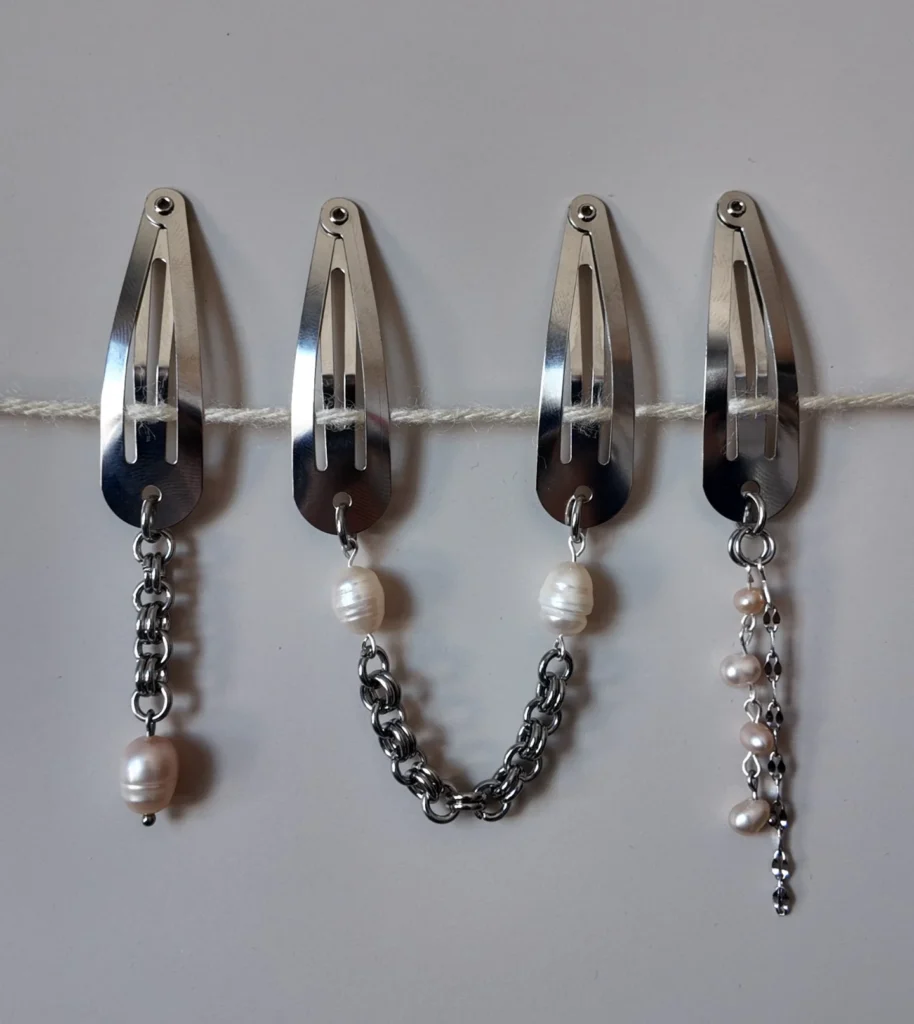
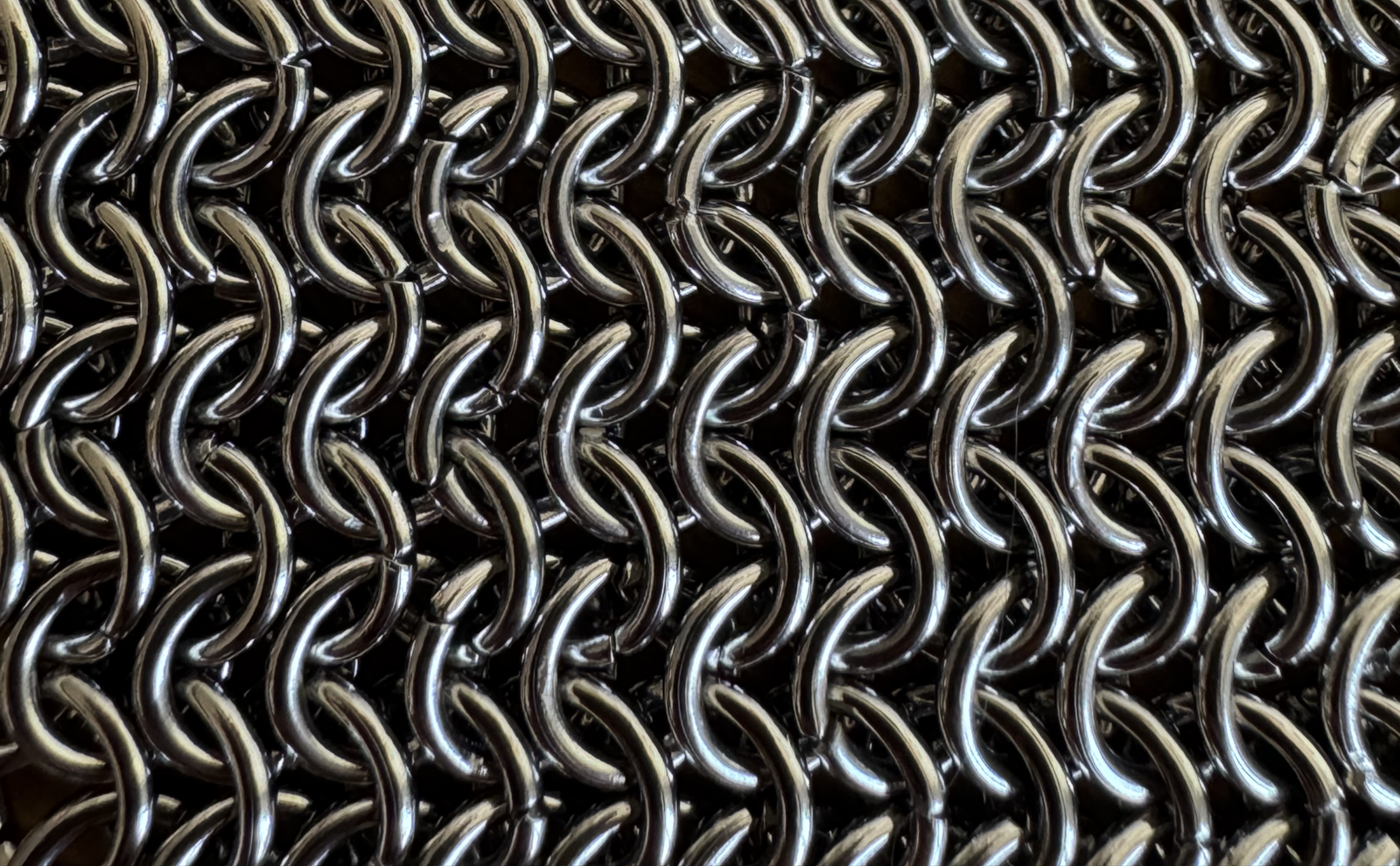
Chainmail jewelry is created by linking small metal rings together in repeating patterns called weaves. These interlocking rings form flexible structures that can be shaped into necklaces, bracelets, headpieces, earrings, and other wearable designs.
Unlike solid metal pieces, chainmail moves with the body. It drapes naturally and adapts to motion, making it visually striking while remaining comfortable to wear.
Key characteristics of chainmail jewelry include:
- Interlocking metal jump rings
- Flexible woven structure
- High durability
- Distinct texture and movement
- Sculptural appearance
Modern chainmail jewelry is most commonly made using stainless steel, aluminum, or precious metals depending on the desired strength and finish.
The Origins of Chainmail Jewelry
Chainmail dates back thousands of years and was originally developed as protective armor. Its flexible structure allowed movement while helping absorb impact.
Over time, these same techniques were adapted into decorative metalwork. Today, chainmail methods are used to create jewelry, accessories, and headpieces that reflect modern design rather than historical reenactment.
How Chainmail Jewelry Is Made
Chainmail jewelry is built by linking individual rings into repeating patterns called weaves. Each weave creates a specific structure, density, and visual rhythm.
The process typically involves:
- Forming metal jump rings from wire
- Opening rings individually
- Linking rings into repeating patterns
- Closing each ring securely
- Shaping the final structure
Even small pieces may require hundreds of rings, while larger designs—such as headpieces or collars—can involve thousands. Crafting chainmail requires precision, patience, and attention to symmetry—qualities that define well-made pieces.
Common Types of Modern Chainmail Jewelry
Chainmail can be shaped into many forms, from subtle accents to bold statement pieces.
Necklaces
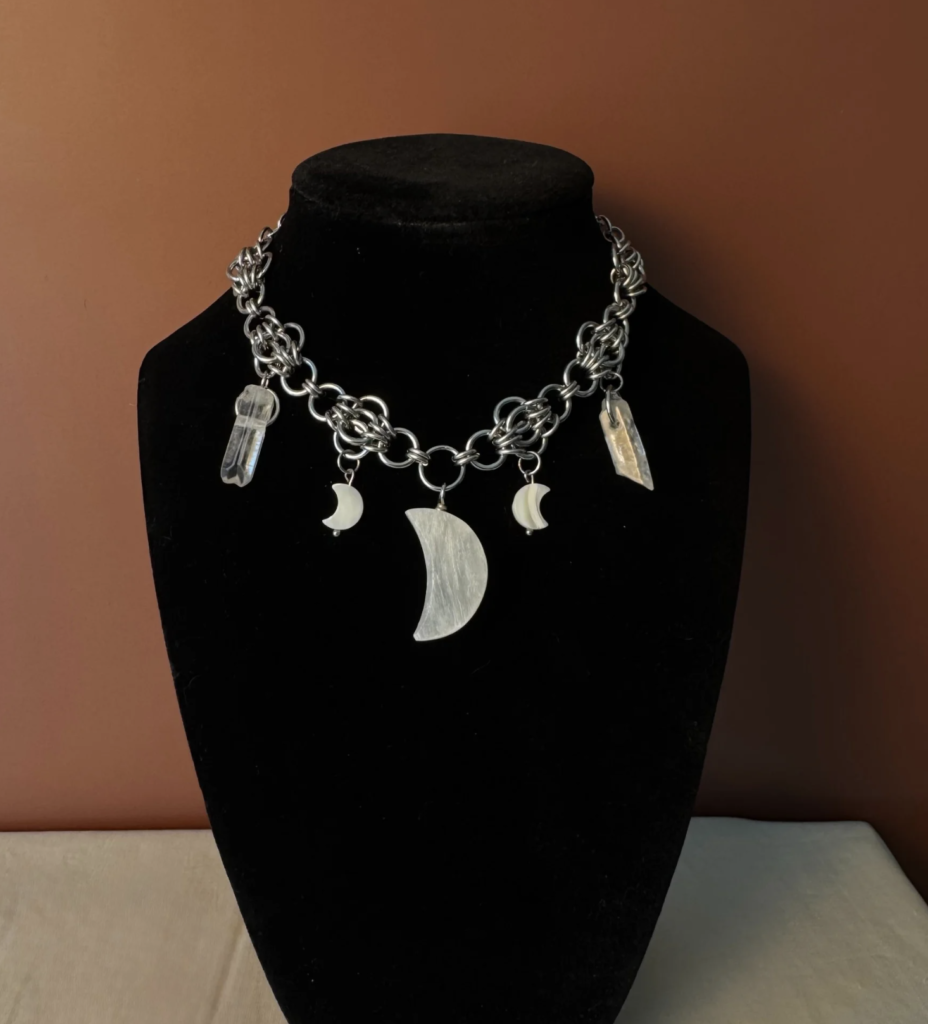
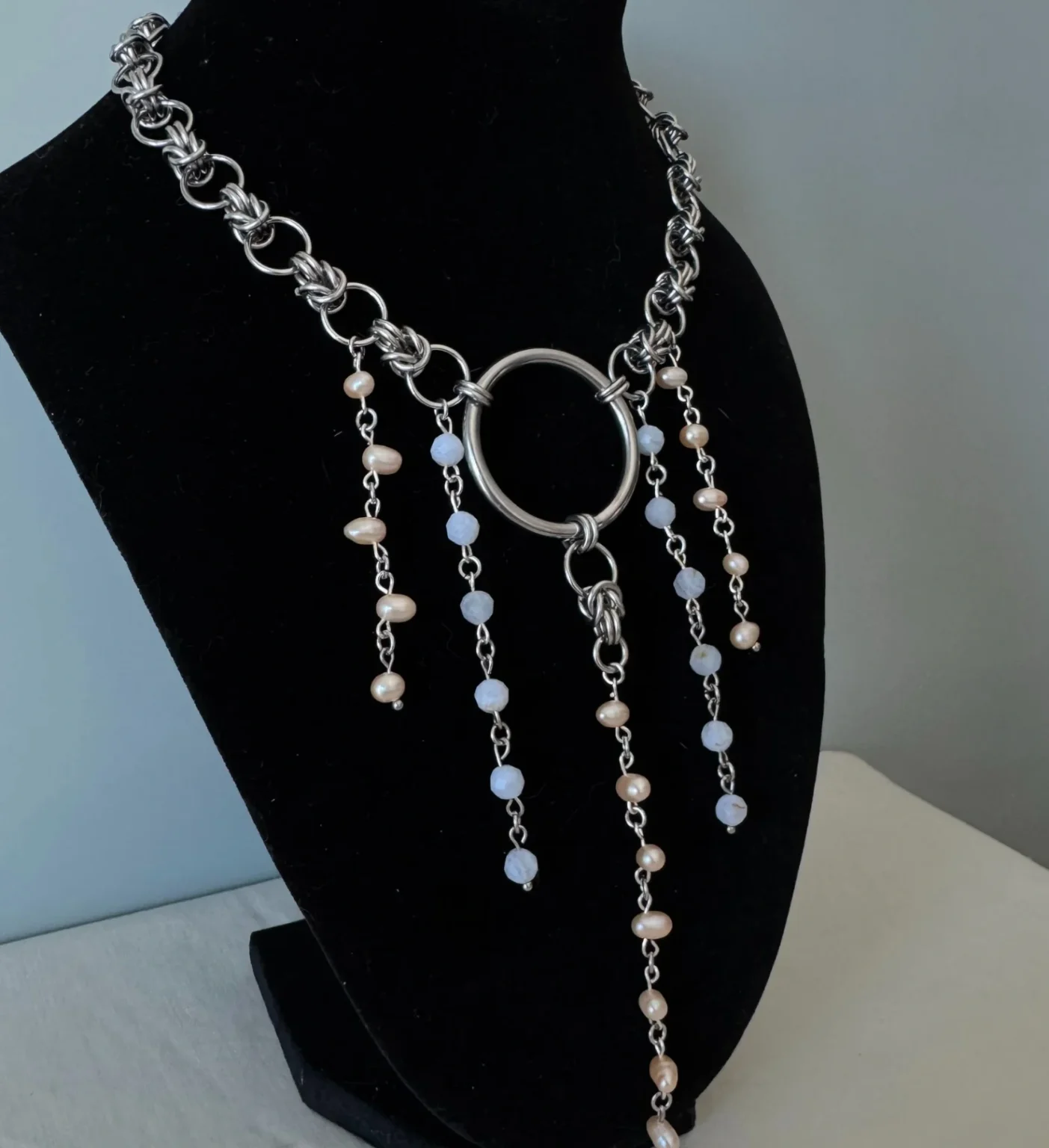
Chainmail necklaces range from delicate layered chains to bold chokers. Their woven structure creates depth and texture that reflects light differently than traditional chain jewelry.
Earrings
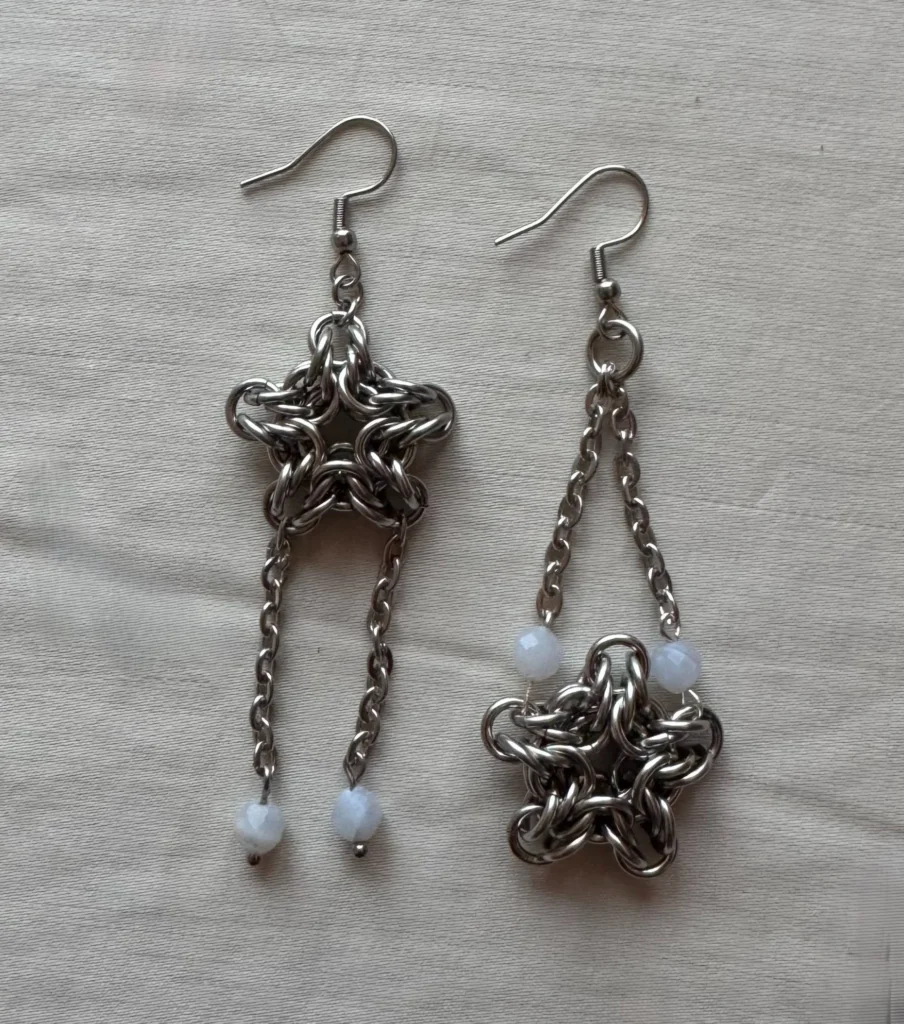
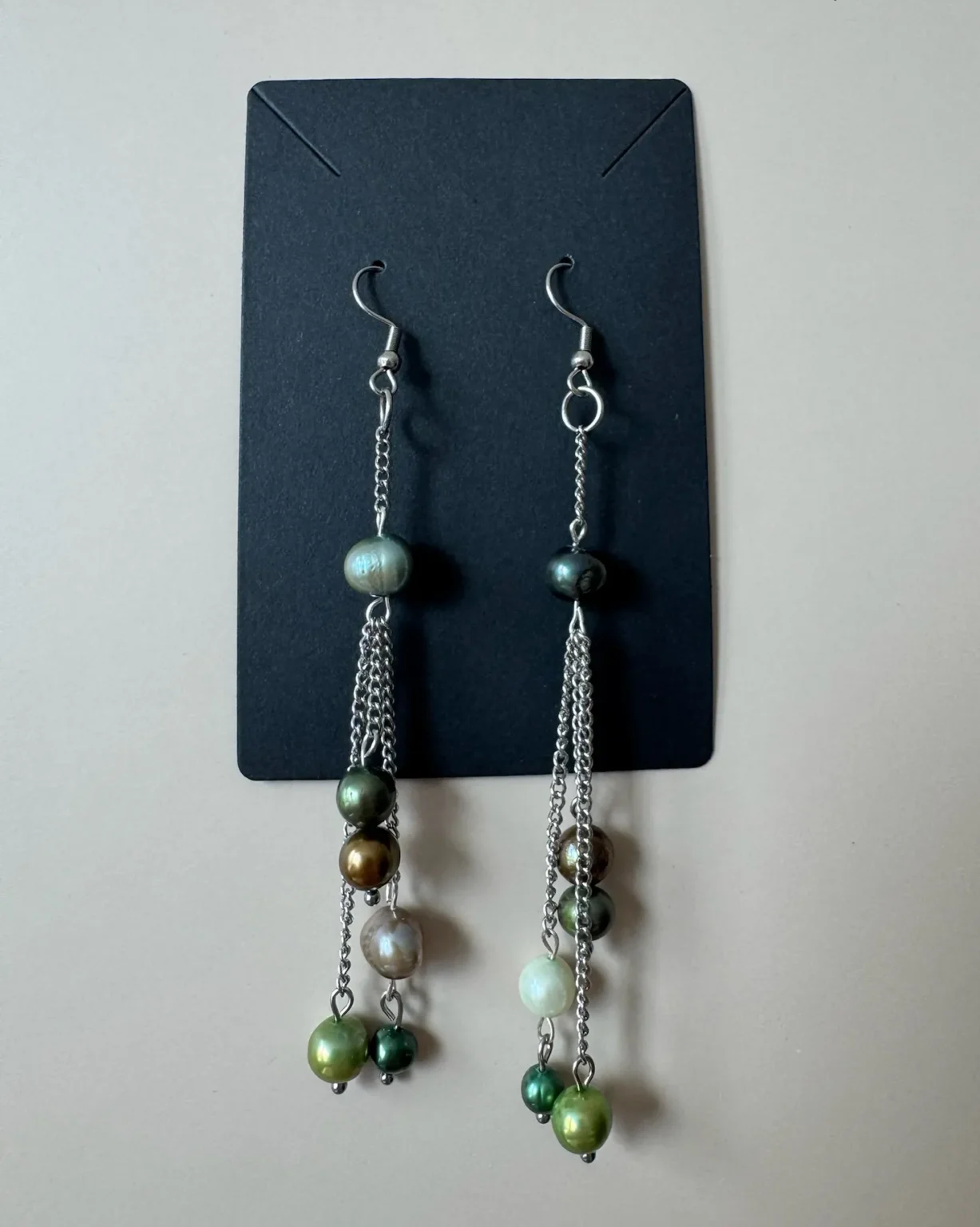
Chainmail earrings introduce movement into smaller designs. The flexible weave allows subtle motion that catches light and adds visual interest.
Bracelets
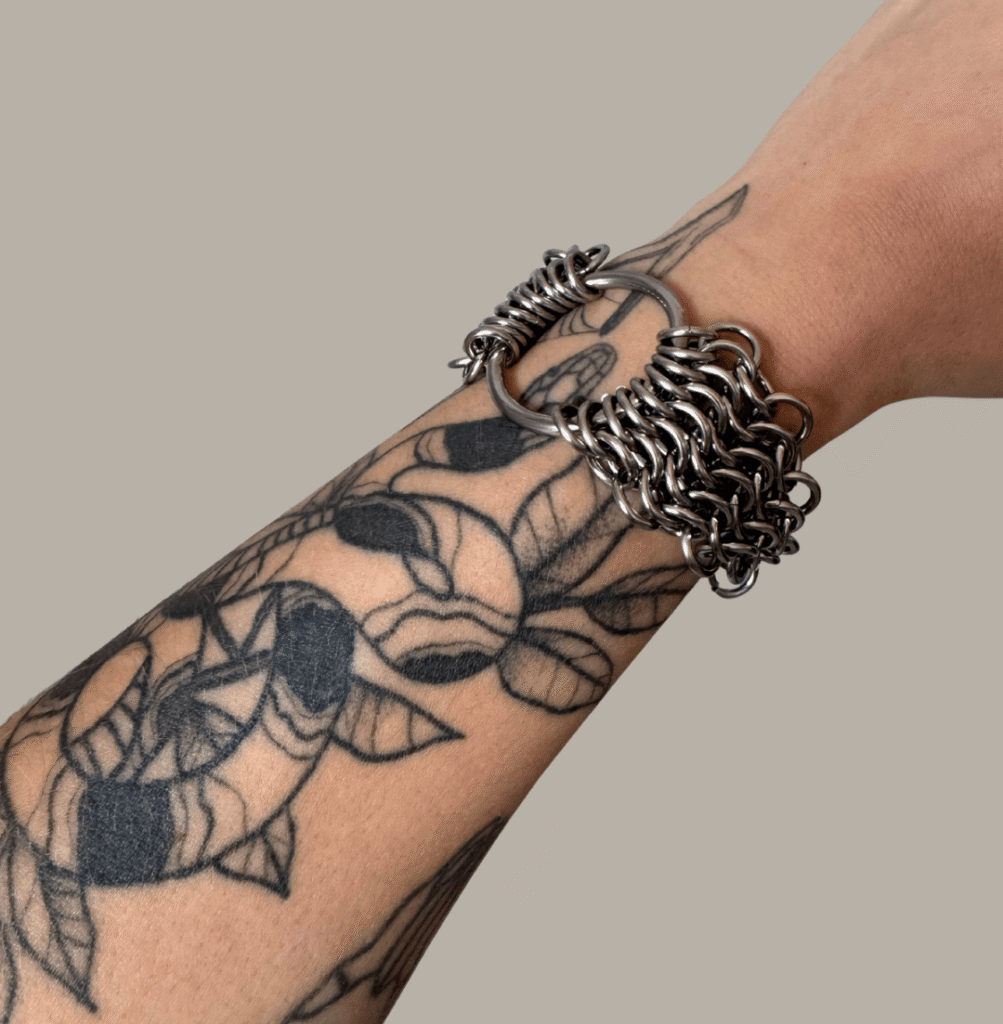
Chainmail bracelets combine durability with comfort. Their flexible structure helps resist snapping under normal wear.
Crowns and Headpieces
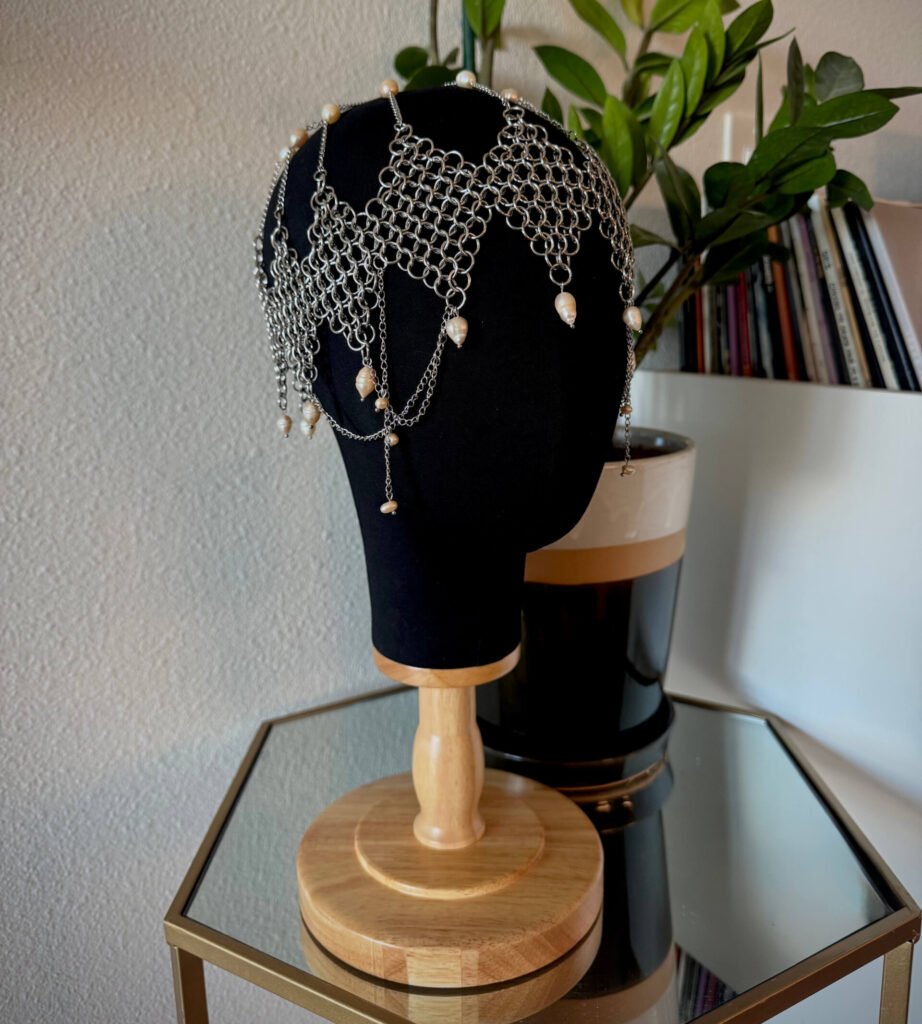
Chainmail crowns and headpieces are among the most visually striking applications of chainmail. They are commonly seen in festivals, performances, editorial styling, and ceremonial settings.

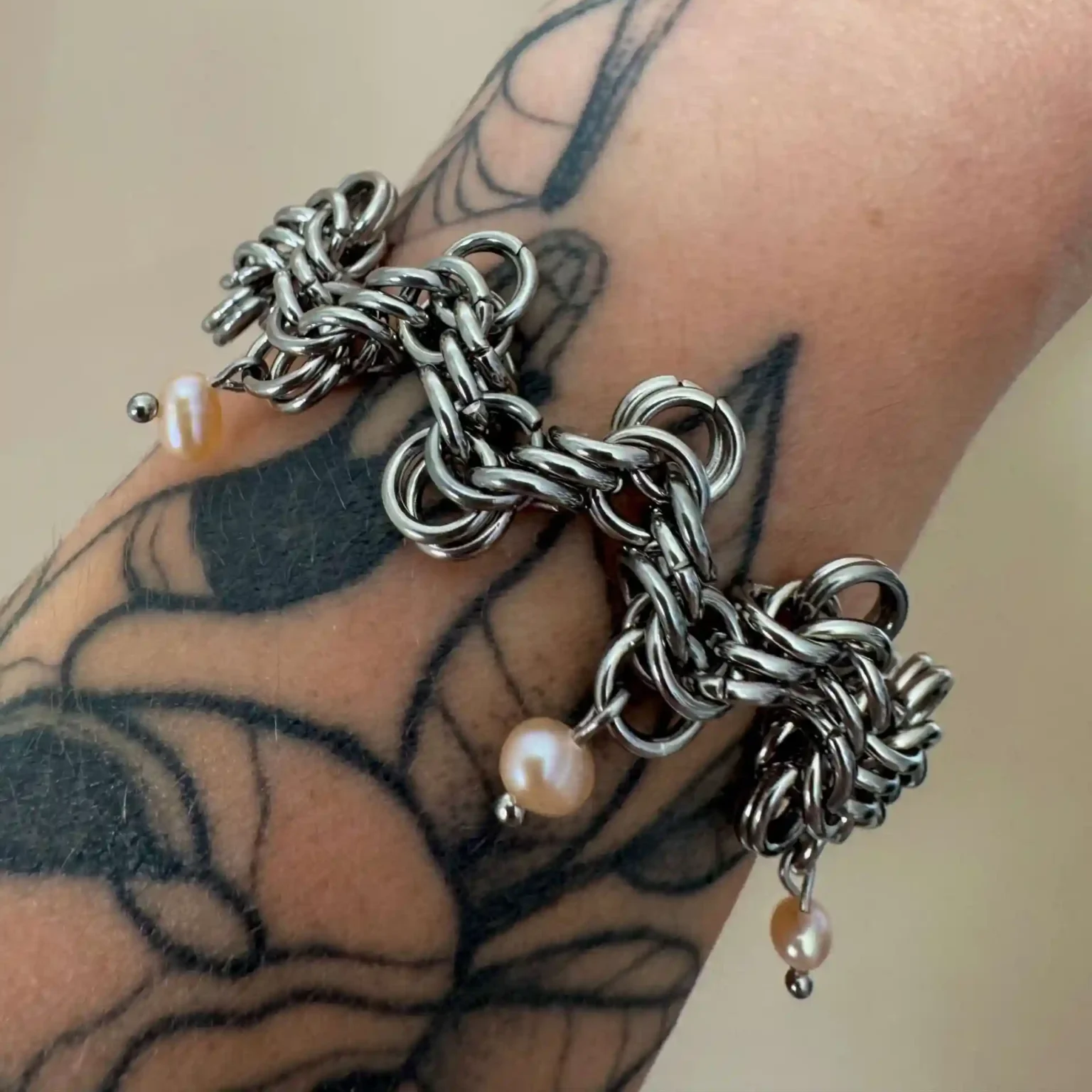
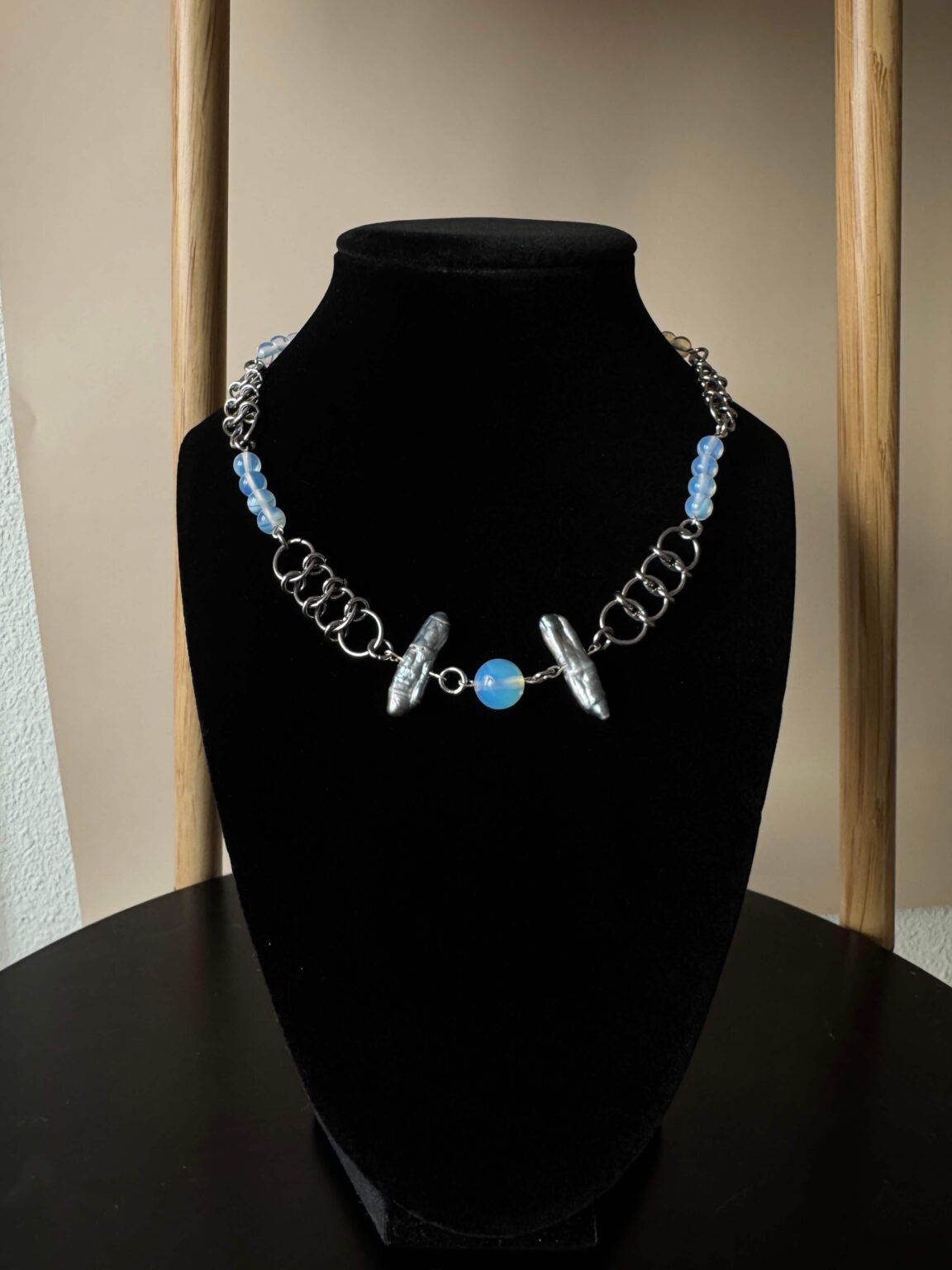
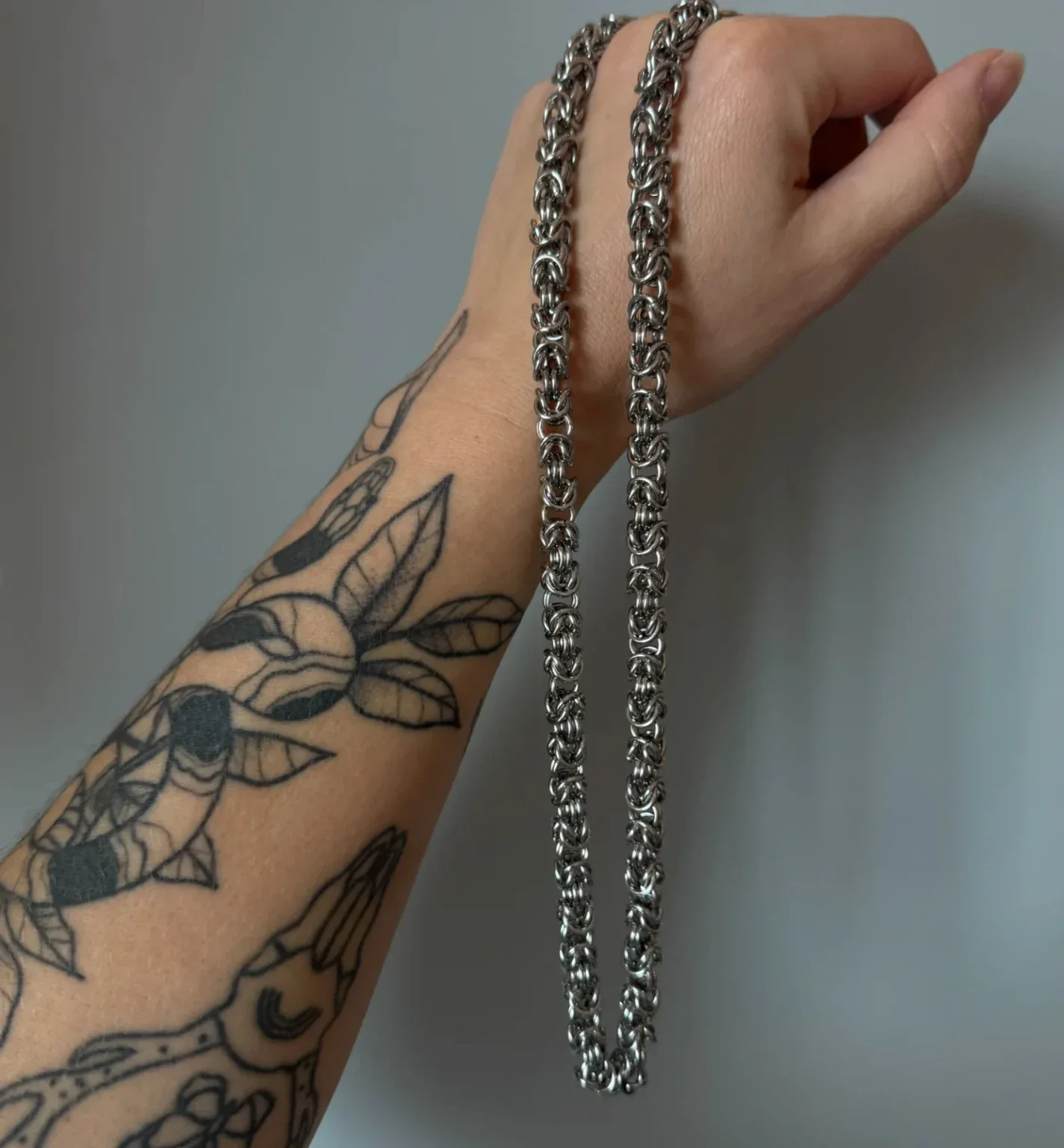
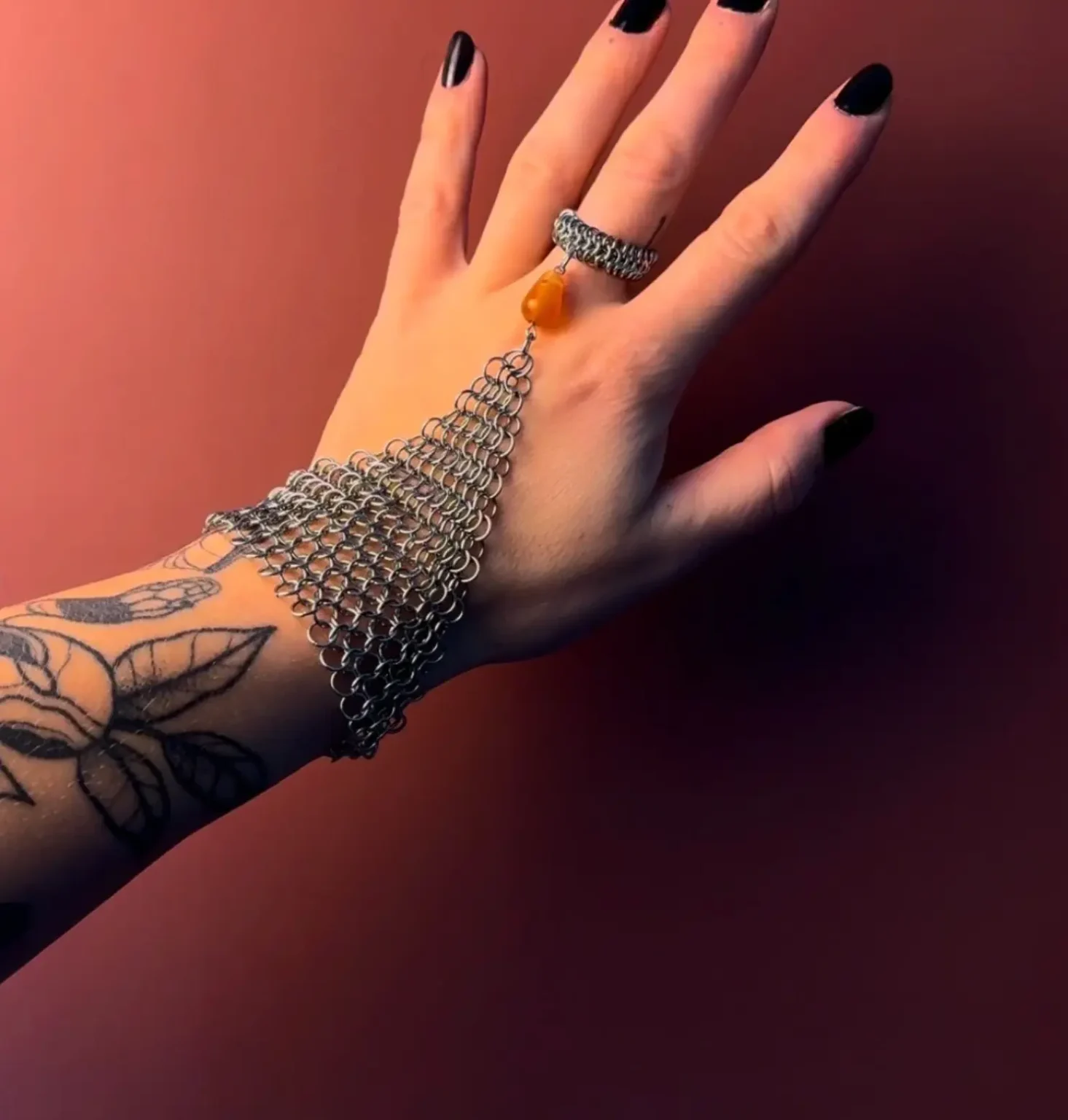
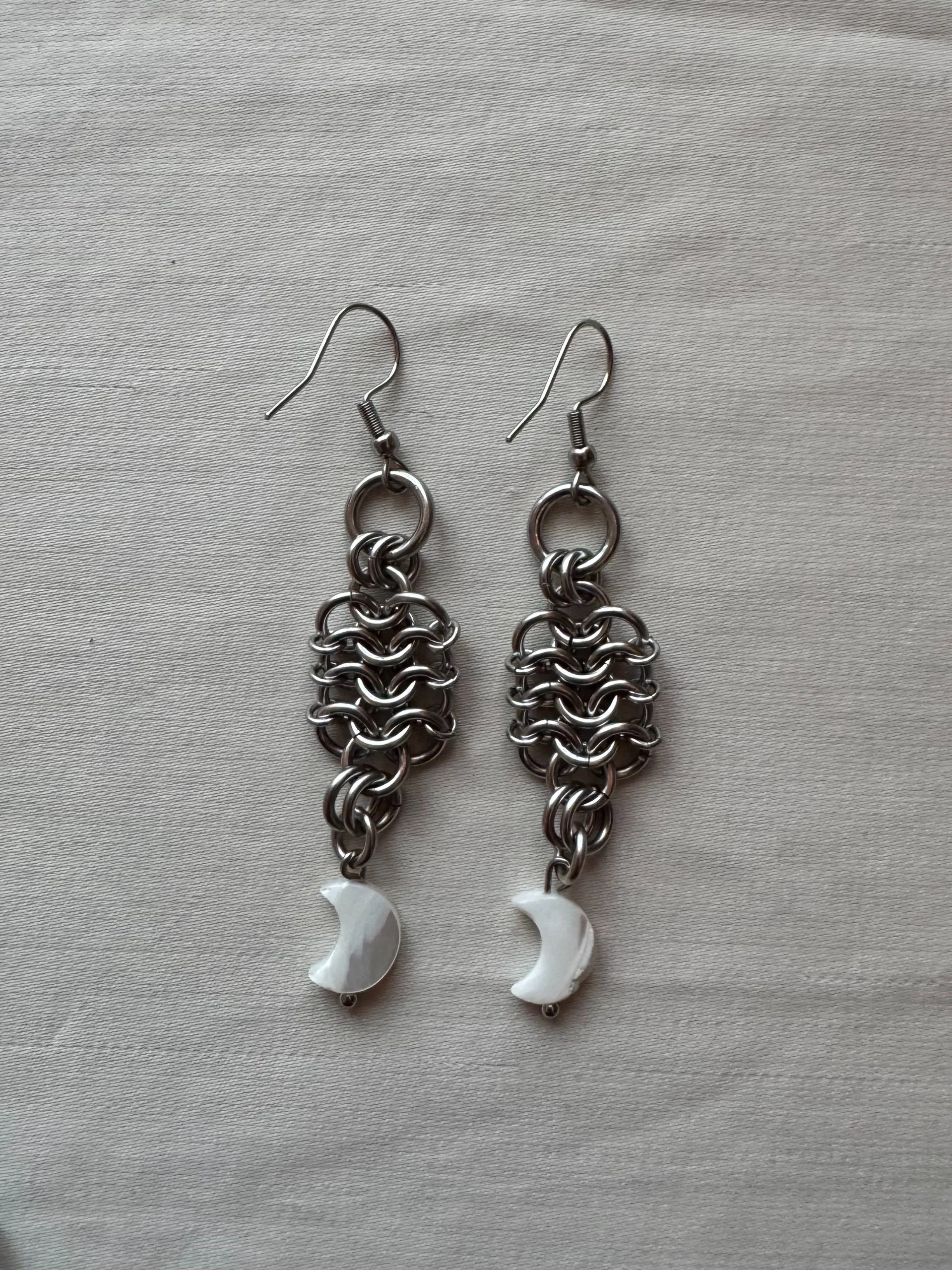
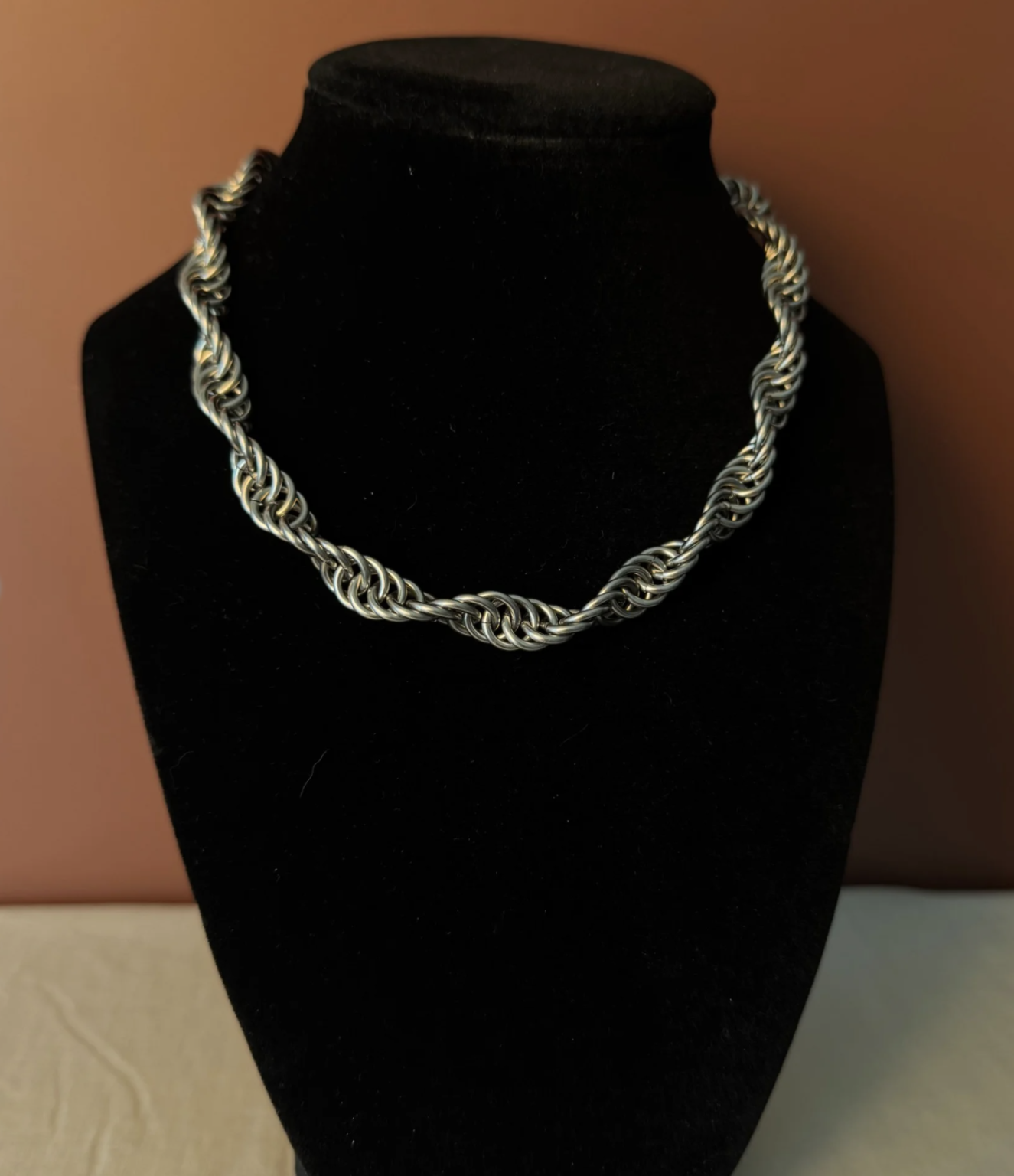
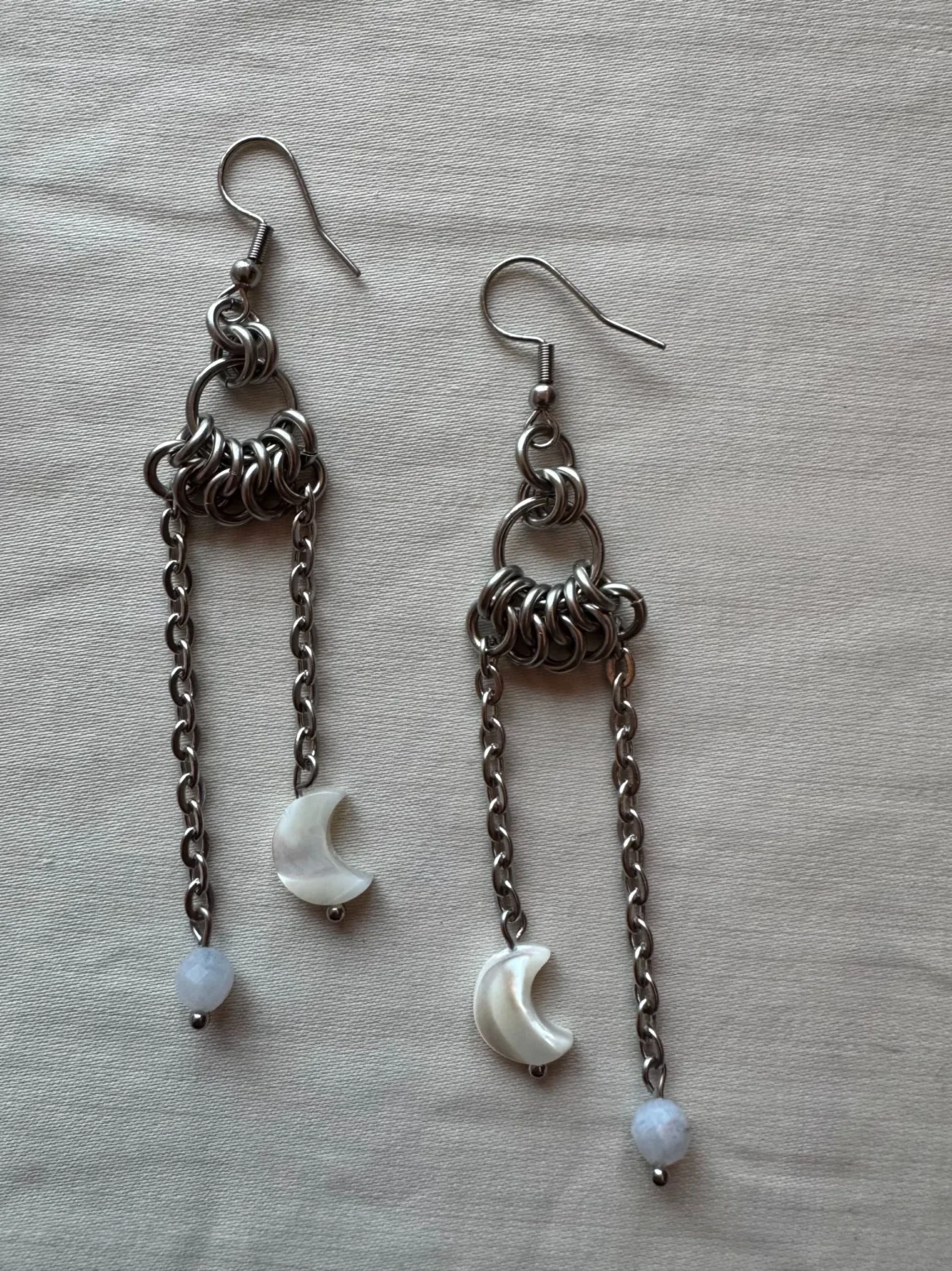
Chainmail Jewelry in Modern Fashion
Chainmail jewelry has gained visibility across contemporary styling due to its bold structure and metallic texture. It appears in editorial work, performance wear, festival culture, and everyday fashion.
Its versatility allows it to shift between subtle and dramatic roles depending on the scale of the piece. Smaller designs integrate easily into daily wear, while larger pieces create strong focal points within an outfit.
What Materials Are Used in Chainmail Jewelry?
Modern chainmail jewelry is typically crafted from a few core metals.
Stainless Steel
Widely used for its strength and corrosion resistance. Stainless steel is durable, tarnish-resistant, and requires minimal maintenance. (Our preference at Halo & Chain)
Aluminum
Lightweight and often used in larger statement pieces where comfort matters.
Precious Metals
Silver, gold, and plated metals are sometimes used for decorative applications or luxury finishes.
Why Chainmail Jewelry Is Popular
Several qualities contribute to the growing interest in modern chainmail jewelry.
Durability
Chainmail distributes stress across multiple rings, helping pieces resist breakage compared to many traditional chains.
Texture and Visual Depth
Multiple metal surfaces reflect light from different angles, creating layered visual complexity.
Versatility
Chainmail fits into a wide range of aesthetics—from minimalist styling to festival and alternative fashion.
Is Chainmail Jewelry Comfortable to Wear?
Despite its structured appearance, well-made chainmail is designed to move naturally with the body. The flexibility of interlocking rings allows pieces to rest comfortably rather than sitting rigidly.
Comfort depends on proper sizing, balanced weight, smooth ring finishing, and correct weave structure. When crafted correctly, chainmail jewelry can be worn comfortably for extended periods.
Is Chainmail Jewelry Right for Everyday Wear?
Many modern chainmail designs are created specifically for daily wear. Smaller and medium-scale pieces integrate easily into everyday styling without overwhelming an outfit.
Common everyday pieces include necklaces, earrings, and lightweight bracelets, while larger statement designs are typically reserved for special occasions or styled looks.
Explore Modern Chainmail Jewelry
Understanding what chainmail jewelry is helps reveal the craftsmanship behind its structure and movement. Whether worn as a subtle accent or a bold focal piece, chainmail offers texture, flexibility, and lasting visual impact.
Modern chainmail jewelry represents a meeting point between tradition and contemporary design—built from individual elements that move together as one.